
Most agents assume property data platforms are built for analysts, not practitioners. That assumption is costing them deals. Understanding how agents use property data platforms, or what the industry calls real estate data intelligence tools, is no longer optional in a market where buyers walk into showings having already read three Zillow reports. Modern platforms now pull from MLS feeds, public records, tax data, and neighborhood analytics, then layer in AI to surface insights in seconds. This article shows you exactly how to use these tools to sharpen your pricing, win client trust, and close faster.
Table of Contents
- Key Takeaways
- How real estate data platforms work
- Market analysis and pricing strategy
- Building client-facing reports that actually get read
- Integrations and workflow efficiency
- Alternatives and emerging trends in 2026
- My take on AI-enhanced data platforms
- Take your data strategy further with Wholesalehq
- FAQ
Key Takeaways
| Point | Details |
|---|---|
| Data platforms work in real time | AI-powered tools synthesize MLS, tax, and public records to give agents current market signals, not stale comps. |
| Pricing accuracy improves with AVMs | AI-driven Automated Valuation Models reduce reliance on guesswork by drawing on decades of verified transaction data. |
| Client reports can update themselves | Dynamic report links refresh data automatically, so your presentations stay relevant without rebuilding them from scratch. |
| Integrations eliminate app switching | Platforms embedded inside showing apps let agents pull market insights on the spot without breaking the client conversation. |
| Compliance protects your data access | MLS data use agreements govern how platforms store and display listings, and violations can cut off your feed entirely. |
How real estate data platforms work
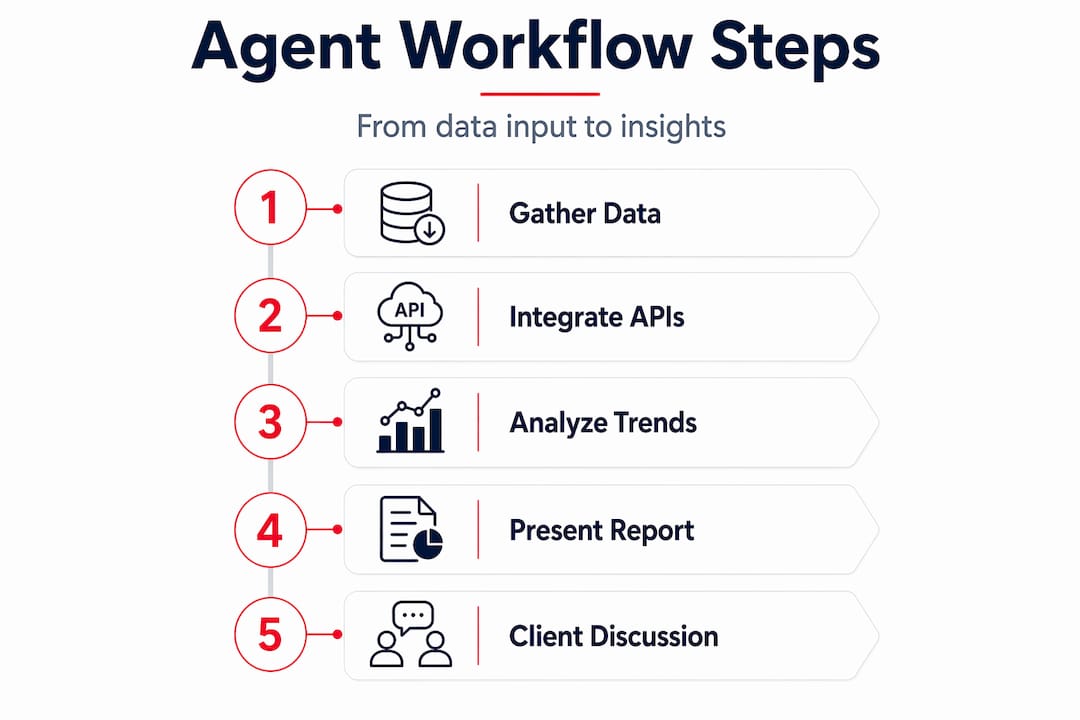
Before getting into tactics, it helps to understand what these platforms actually do under the hood. A property data platform is a software system that aggregates information from multiple sources and presents it in a format agents can act on. The industry term for the broader category is real estate data intelligence, and the best platforms combine raw data with machine learning to move beyond simple search.
The core data inputs typically include:
- MLS listings: active, pending, and sold properties with price, days on market, and listing history
- Public records: ownership history, deed transfers, foreclosure filings, and liens
- Tax and assessment data: assessed values, tax payment status, and exemption records
- Mortgage data: loan origination, outstanding balances, and equity estimates
- Neighborhood and trade area data: school ratings, walkability scores, demographic trends, and local amenities
What separates modern platforms from older databases is the AI layer on top. Machine learning models scan these inputs continuously, spotting patterns that a manual search would miss entirely. For example, ATTOM's AI-powered AVM draws on 30 years of time-adjusted transactions to produce valuations across 160 million US properties, including markets with thin sales histories where traditional comps fall apart.
APIs and integrations are what make these platforms practical for daily agent work. Rather than logging into a separate portal, data flows directly into the tools you already use, from CRMs to showing management apps. That architecture is what turns a data platform from a research tool into a real-time advisor.
Market analysis and pricing strategy
This is where agents get the most immediate return from data platforms. The old approach was pulling three comps, averaging the numbers, and presenting a price range. That works in a stable market. It fails in a fast-moving one.
Here is a practical workflow for using data platforms in your pricing process:
- Track inventory velocity first. Before looking at individual comps, check how quickly similar properties are moving in your target ZIP code. MLS-derived signals help you gauge whether you are in a supply-constrained or buyer-favorable environment before you ever run a single comp.
- Run AI-powered comps, not just recent sales. Standard comps show you what sold. AI-driven Automated Valuation Models show you what a property is worth given current demand signals. The difference matters when a neighborhood shifts quickly.
- Assess demand signals at the micro level. Look at days-on-market trends, price reduction frequency, and list-to-sale ratios by street or block, not just by ZIP. Verified data at multiple levels from national down to neighborhood gives you the specificity to advise clients with real confidence.
- Build your pricing recommendation around data, not instinct. When you present a price, show the data behind it. Clients who see the methodology trust the number.
Here is how AI-powered AVMs compare to traditional CMA approaches:
| Method | Data sources | Update frequency | Best use case |
|---|---|---|---|
| Traditional CMA | Manually selected comps | Agent-driven, static | Stable, data-rich markets |
| AI-powered AVM | 30+ years of transactions, current demand signals | Continuous | Sparse data markets, fast-moving conditions |
| Hybrid approach | AVM baseline plus agent-selected comps | Semi-dynamic | Most residential pricing scenarios |
The hybrid approach wins most of the time. Use the AVM to establish a defensible baseline, then apply your local knowledge to adjust. That combination is what separates agents who price confidently from those who hedge every recommendation.

Building client-facing reports that actually get read
Raw data does not persuade clients. Packaged, contextualized data does. The good news is that modern platforms do most of the packaging work for you.
The most effective agent workflow for client reports looks like this:
- Start with a reusable template. RPR's Next Gen property templates are designed for buyers, sellers, and CMA presentations, and they update every 48 hours through dynamic links. You build the template once and it stays current without manual refreshing.
- Customize the narrative layer. AI-generated summaries, like those produced by RPR's AI Property Insights, convert complex market data into plain-language talking points. These are not generic descriptions. They pull in key property details, market trends, and lifestyle cues tailored to whether your client is a buyer, seller, or investor.
- Use AI-generated scripts for follow-up. RPR's AI ScriptWriter produces market trend and trade area scripts you can share via email, social media, or text. This turns a data platform into a content engine for your personal brand.
- Share reports through multiple channels. Dynamic report links can be sent via email, downloaded as PDFs, or shared on social media. The data updates automatically, so a report you sent two weeks ago still reflects current conditions when a client revisits it.
Pro Tip: Before a listing presentation, run an AI-generated market summary for the seller's neighborhood and read it out loud. If you can explain the market in 60 seconds without notes, you will come across as the most prepared agent in the room.
The agents who use these reports most effectively treat them as conversation starters, not closing documents. A well-built report gives you a reason to call, a reason to follow up, and a reason for clients to forward your name to their network.
Integrations and workflow efficiency
The biggest friction point for agents is not learning a new platform. It is switching between platforms mid-conversation. Every time you exit a showing app to open a browser, you lose momentum with the client standing next to you.
The solution is embedded integrations. NAR members can access RPR market insights directly inside the SentriKey app, which means lockbox management and live market data live in the same interface. You open the door and pull up comps without breaking eye contact with your client.
That kind of integration changes the dynamic of a showing. Instead of saying "let me check on that later," you answer the question in the moment. Clients notice. It builds the kind of credibility that referrals are built on.
Compliance is the piece most agents overlook until it becomes a problem. MLS data use agreements and NAR guidelines govern how platforms store, display, and redistribute listing data. If a vendor you use falls out of compliance, your data feed can be cut off entirely, often with little warning. Before you build your workflow around any platform, verify that it operates under a current data license agreement with your local MLS.
Pro Tip: Ask any new platform vendor directly: "Are you compliant with our local MLS data use agreement?" A vendor that cannot answer that question clearly is a vendor worth avoiding.
Alternatives and emerging trends in 2026
The traditional platforms built on MLS feeds and public records are not going away, but they are no longer the only option. A new category of AI-first tools is emerging that approaches property analytics from different angles.
Specialized platforms now offer hyperlocal lifestyle scoring, trade area analytics, and predictive demand modeling that older systems do not provide. For agents working in niche markets, like luxury, commercial, or investment properties, these tools can surface insights that a general-purpose platform misses. RPR supports both residential and commercial professionals with on-market and off-market research, which makes it one of the more versatile options for agents who work across segments.
| Platform type | Strengths | Limitations |
|---|---|---|
| Traditional MLS-based platforms | Deep listing history, broad agent adoption | Slower AI integration, less predictive |
| AI-first valuation tools | High accuracy in sparse markets, continuous updates | Narrower data scope, newer track records |
| Hyperlocal analytics tools | Lifestyle scoring, trade area depth, niche insights | May require separate subscription and integration work |
For agents thinking about 2026 and beyond, the smart move is not picking one platform and committing entirely. It is building a small stack of two or three tools that cover different angles, then using integrations to connect them. An AI-driven home valuation tool paired with a reporting platform and a showing app integration covers most of what a residential agent needs day to day.
My take on AI-enhanced data platforms
I have watched agents resist these tools for years on the grounds that real estate is a relationship business and data gets in the way. I disagree with that framing completely. In my experience, data does not replace the relationship. It gives you something worth saying when you are in it.
The agents I have seen adopt AI Property Insights and similar tools do not suddenly become robots. They become more confident. They stop hedging answers with "I'll get back to you on that" and start responding with specifics. Clients feel that difference immediately.
What I have learned from watching this play out is that the barrier is almost never the technology. It is the habit. Most agents try a platform once, do not see instant results, and go back to their old workflow. The ones who stick with it for 30 days build a new default, and after that, going back feels like working with one hand tied behind their back.
The uncomfortable truth is that consistent, multi-level property data is already in the hands of your competition. The question is not whether to use these tools. It is how fast you get comfortable with them.
— Zach
Take your data strategy further with Wholesalehq
If you are ready to move beyond basic MLS searches and start working with data that actually surfaces opportunity, Wholesalehq is worth a close look. The platform combines motivation scoring, cash transaction analysis, and competitor density metrics to help agents and investors identify leads in markets where the competition has not caught up yet.
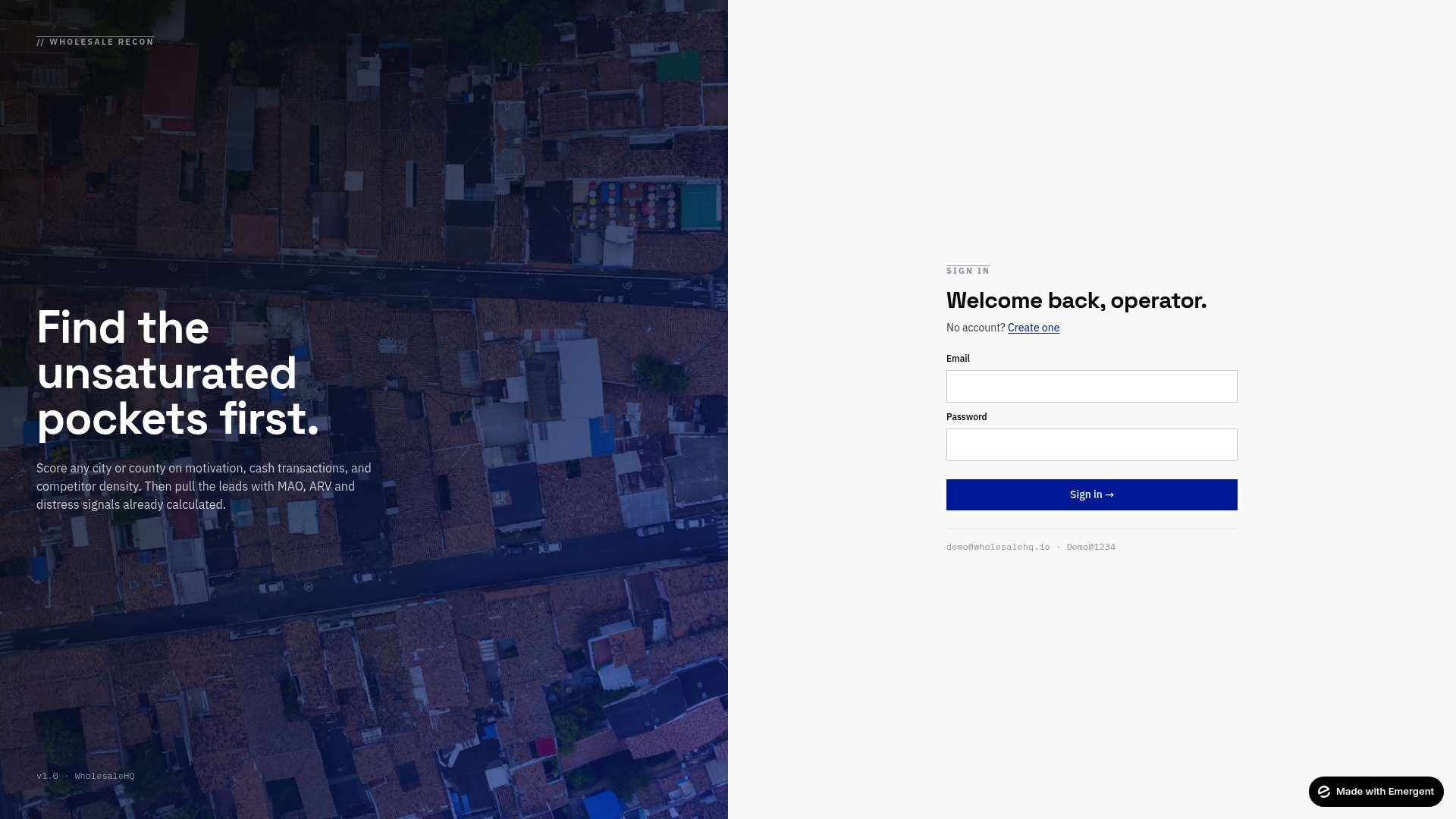
Where most platforms show you what is listed, Wholesalehq shows you what is worth pursuing, with calculated MAO and ARV built in so you walk into every conversation knowing your numbers. For agents who want to add an investment and wholesale angle to their practice, or who are tired of fighting over the same saturated leads as everyone else, explore what Wholesalehq offers and see how a data-first approach changes the quality of your pipeline.
FAQ
What do property data platforms actually include?
Property data platforms aggregate MLS listings, public records, tax data, mortgage history, and neighborhood analytics into a single interface. The best platforms layer AI on top to surface trends and valuations agents can use immediately.
How do AI-powered AVMs differ from traditional comps?
AI-powered AVMs use decades of time-adjusted transaction data and current demand signals to generate valuations, while traditional comps rely on manually selected recent sales. AVMs are especially useful in markets with limited recent sales activity.
Can agents share data platform reports with clients?
Yes. Platforms like RPR allow agents to share reports via email, text, download, or social media, with dynamic links that update automatically so clients always see current data.
What compliance issues should agents watch for?
MLS data use agreements govern how platforms can store and display listing data. Agents should verify that any platform they use holds a current license with their local MLS to avoid losing data access.
Are there alternatives to traditional real estate data platforms?
Yes. AI-first valuation tools and hyperlocal analytics platforms offer capabilities that traditional MLS-based systems do not, including predictive demand modeling and lifestyle scoring. Many agents use two or three complementary tools rather than relying on a single platform.