
Not every seller is worth your time. The ones who are — the ones who will actually negotiate, move fast, and accept your offer — share a common trait: they need to sell more than they need to squeeze out every last dollar. Building a motivated seller list that consistently surfaces those people is what separates investors closing deals every month from those spinning their wheels on dead leads. The challenge is that not all list sources are created equal, and most investors waste money on low-quality data before they figure that out.
Table of Contents
- Key takeaways
- How to evaluate a motivated seller list before you buy
- The top 10 motivated seller list sources
- 1. Absentee owner lists
- 2. Pre-foreclosure lists
- 3. Probate lists
- 4. Tax-delinquent lists
- 5. Driving for dollars
- 6. Expired listings
- 7. For sale by owner (FSBO) listings
- 8. Distressed property leads from price cuts and long days on market
- 9. Social media and PPC leads
- 10. Networking and direct outreach
- Comparing your top list sources at a glance
- Building a multi-channel acquisition strategy that actually works
- My take on what actually moves the needle in 2026
- Take your motivated seller list further with Wholesalehq
- FAQ
Key takeaways
| Point | Details |
|---|---|
| Motivation stage matters | Sellers split into active and passive groups, each requiring different outreach speed and messaging. |
| Probate and pre-foreclosure convert best | These two list types produce conversion rates of 2.5–4%, the highest across all channels. |
| Stack your list sources | Combining absentee, probate, and pre-foreclosure lists with de-duplication tools maximizes deal flow without overlap. |
| Speed-to-lead is non-negotiable | Reaching a lead within 15 minutes of capture dramatically improves response rates across all list types. |
| Data hygiene drives ROI | Filtering by equity, tenure, and urgency stage separates high-conversion contacts from wasted cold outreach. |
How to evaluate a motivated seller list before you buy
Before you spend a dollar on any list, you need a framework for judging its quality. A motivated seller prioritizes speed and certainty over maximizing their sale price, typically because of a life event or financial pressure. That definition matters because it tells you what to look for in the data.
The first filter is motivation stage. Sellers break into two categories: active and passive. Active sellers have already taken steps toward selling — they've listed, contacted an agent, or filed paperwork. Passive sellers want to sell but haven't moved yet. Your outreach speed and message framing need to differ sharply between these two groups.
Beyond stage, look at these data points when evaluating any list source:
- Price reductions and days on market. Homes listed for over 90 days or with multiple price cuts signal eagerness and give you negotiation leverage.
- Equity position. High-equity owners have room to accept a discount. Low-equity sellers may need creative deal structures.
- Tenure. Owners who have held a property for 10-plus years are more likely to have built equity and may be ready to cash out.
- Foreclosure stage. Pre-foreclosure contacts have a hard deadline, which creates urgency you can work with.
- Probate status. Heirs managing estates often prioritize a quick, clean close over top dollar.
Pro Tip: Before purchasing any list, ask the provider whether records are updated monthly or quarterly. Stale data is the single biggest reason cold outreach campaigns fail.
Conversion rates and cost per lead are your final checkpoints. Top channels in 2026 come in under $4,000 cost per contract when managed correctly. Anything above that threshold should deliver a proportionally higher conversion rate to justify the spend.
The top 10 motivated seller list sources
1. Absentee owner lists
Absentee owners — landlords or investors who don't live in the property — are among the most reliable sources of real estate motivated sellers. The best absentee lists filter for out-of-state mailing addresses, long tenure (seven-plus years), and high equity. An absentee owner who bought in 2012 and lives three states away is far more likely to sell than one who bought last year and lives nearby. Conversion rates are lower than probate or pre-foreclosure unless you apply these filters aggressively.

2. Pre-foreclosure lists
A pre-foreclosure list is one of the most time-sensitive sources you can work. Once a notice of default is filed, the homeowner faces a hard auction deadline, which creates real urgency. These sellers are often willing to accept a below-market offer just to avoid the credit damage of a completed foreclosure. The key is speed. You need to contact these homeowners early in the pre-foreclosure window, not two weeks before the auction.
3. Probate lists
Probate lists target heirs and estate administrators who inherit property they often don't want to manage. Probate and pre-foreclosure lists convert at 2.5–4%, the highest of any channel. Heirs are frequently out-of-state, emotionally detached from the property, and motivated by a desire to close the estate quickly. Court filings are public record, so this data is accessible. The challenge is that probate timelines vary by state, and some cases drag on for months before a sale is possible.
4. Tax-delinquent lists
When a homeowner stops paying property taxes, it signals financial stress. Tax-delinquent lists are particularly useful for land plays and low-equity properties where other list types don't apply. These sellers may not be in a rush the way a pre-foreclosure homeowner is, but the financial pressure is real. County tax assessor offices publish delinquent rolls regularly, and many data providers aggregate this information for easy filtering.
5. Driving for dollars
Driving for dollars is the most time-intensive source on this list, but it produces leads that no database can replicate. You physically scout neighborhoods looking for distressed property leads: overgrown yards, boarded windows, peeling paint, and uncollected mail. Apps like DealMachine let you log properties on the spot and pull owner contact information immediately. The leads you find this way are often invisible to competing investors who rely exclusively on purchased lists.
Pro Tip: Combine driving for dollars with your absentee owner list. If a property you flag while driving also appears on your absentee list, treat it as a top-priority lead. The overlap signals both physical distress and owner disengagement.
6. Expired listings
An expired listing is a property that sat on the MLS without selling. The seller already tried the traditional route and failed. That failure creates a specific kind of pressure: discouragement, time lost, and often a growing financial burden. These sellers are frequently open to off-market conversations they would have rejected six months earlier. Pull expired listings from the MLS and reach out within 48 hours of expiration for the best response rates.
7. For sale by owner (FSBO) listings
FSBO sellers are warm leads. They've already decided to sell and are actively trying to do it without an agent. Many are testing the market and will struggle without professional support. As an investor, you can approach them with a straightforward, no-commission offer that solves their problem. FSBO listings are publicly available on sites like Zillow and Craigslist, making them easy to compile into a working motivated seller list at no data cost.
8. Distressed property leads from price cuts and long days on market
Markets like Phoenix and Tampa show 25–29% of listings with price reductions as of April 2026. Those price cuts are a public signal of seller motivation. When you combine a property that has been sitting for 90-plus days with one or more price reductions, you have a seller who is selling under pressure whether they admit it or not. Filter MLS data and platforms like Redfin or Zillow by days on market and reduction history to build this segment of your list.
9. Social media and PPC leads
Paid digital channels — Google PPC and Facebook/Instagram ads targeting homeowners in distress situations — let you build a scalable inbound funnel. These leads come to you, which changes the dynamic entirely. The cost per lead is higher than most list-based outreach, but the conversion rate on inbound leads is also higher because the seller self-identified. This channel works best for investors with a marketing budget and the infrastructure to respond quickly to inbound inquiries.
10. Networking and direct outreach
Probate attorneys, bankruptcy attorneys, divorce attorneys, and property managers all encounter motivated sellers before those sellers ever appear on a public list. Building relationships with these referral sources creates a pipeline of off-market leads that never compete with other investors. Handwritten letters to specific segments of your motivated seller lists also outperform printed direct mail in response rate, particularly for probate and pre-foreclosure contacts.
Comparing your top list sources at a glance
| List source | Est. cost per lead | Conversion rate | Time to close | Best for |
|---|---|---|---|---|
| Absentee owners | $0.10–$0.50 | 0.5–1.5% | 30–90 days | Buy-and-hold investors |
| Pre-foreclosure | $0.20–$1.00 | 1.5–3.5% | 14–45 days | Wholesalers, fix-and-flip |
| Probate | $0.30–$1.50 | 2.5–4% | 30–120 days | Experienced investors |
| Tax-delinquent | $0.10–$0.40 | 0.5–1.5% | 45–90 days | Land investors |
| Driving for dollars | Time only | 1–3% | 30–60 days | Boots-on-ground investors |
| Expired listings | Free (MLS) | 1–2.5% | 14–30 days | Agents, wholesalers |
| FSBO | Free | 1–2% | 14–45 days | All investor types |
| Distressed/price cuts | Free (MLS filter) | 1–2% | 30–60 days | Fix-and-flip buyers |
| PPC/social media | $10–$50 | 3–6% | 7–21 days | High-volume operators |
| Networking/referrals | Relationship cost | 5–15% | 7–30 days | Experienced investors |
Building a multi-channel acquisition strategy that actually works
The investors who close the most deals don't rely on a single list. They stack sources, de-duplicate contacts, and run parallel outreach sequences tailored to each seller's urgency stage. Stacking multiple list types and running parallel outreach with rigorous data hygiene is the workflow that separates high-volume operators from everyone else.
Here's how to build that workflow:
- Segment by motivation stage first. Urgency-based segmentation determines your outreach script, timing, and channel. A probate heir gets a different message than an absentee owner with no deadline pressure.
- De-duplicate before you dial. Tools like REISift can match records across list sources so you don't contact the same person five times from five different lists. That overlap is a waste of money and damages your reputation.
- Enrich your data. Append equity data, tenure, and mailing address verification to every list before outreach begins. Raw lists without enrichment produce raw results.
- Balance your portfolio. Mix high-cost, high-conversion channels (PPC, probate) with low-cost, longer-cycle channels (absentee mail, tax-delinquent) to maintain consistent deal flow without blowing your budget on any single source.
- Respond within 15 minutes. Outreach within 15 minutes of lead capture with multi-touch follow-ups over 45 days dramatically improves response rates. Speed is the single most underrated variable in motivated seller acquisition.
Pro Tip: AI cold callers are now capable enough to handle first-contact outreach on high-volume lists, freeing your team to focus on warm conversations. Use them on your absentee and tax-delinquent lists where volume is high and initial response rates are low.
My take on what actually moves the needle in 2026
I've watched investors build elaborate list-buying systems and still close fewer deals than someone working a single well-segmented probate list with disciplined follow-up. The list source matters less than most people think. The segmentation and the speed matter enormously.
What I've learned is that most list strategies fail at the same point: the moment between getting a lead and making first contact. Investors buy the data, load it into a spreadsheet, and then let it sit for two weeks while they "get organized." By then, another investor has already made an offer.
The other thing I'd push back on is the assumption that data-driven lists and boots-on-the-ground tactics are separate strategies. They're not. The best acquisition machines I've seen combine a driving-for-dollars scouting operation with a purchased absentee or pre-foreclosure list, then cross-reference the two. Properties that show up in both places are your highest-priority calls.
AI tools are genuinely changing the first-contact layer. I've seen operations use AI callers to run initial outreach on lists of 5,000-plus contacts, then route the warm responses to a human closer. That workflow compresses the time between list purchase and live conversation in a way that wasn't possible two years ago. The personalization still has to come from the human side. But the volume problem? AI is solving it.
— Zach
Take your motivated seller list further with Wholesalehq
Finding the right list is only half the equation. The other half is knowing which leads on that list are actually worth your time before you make a single call.
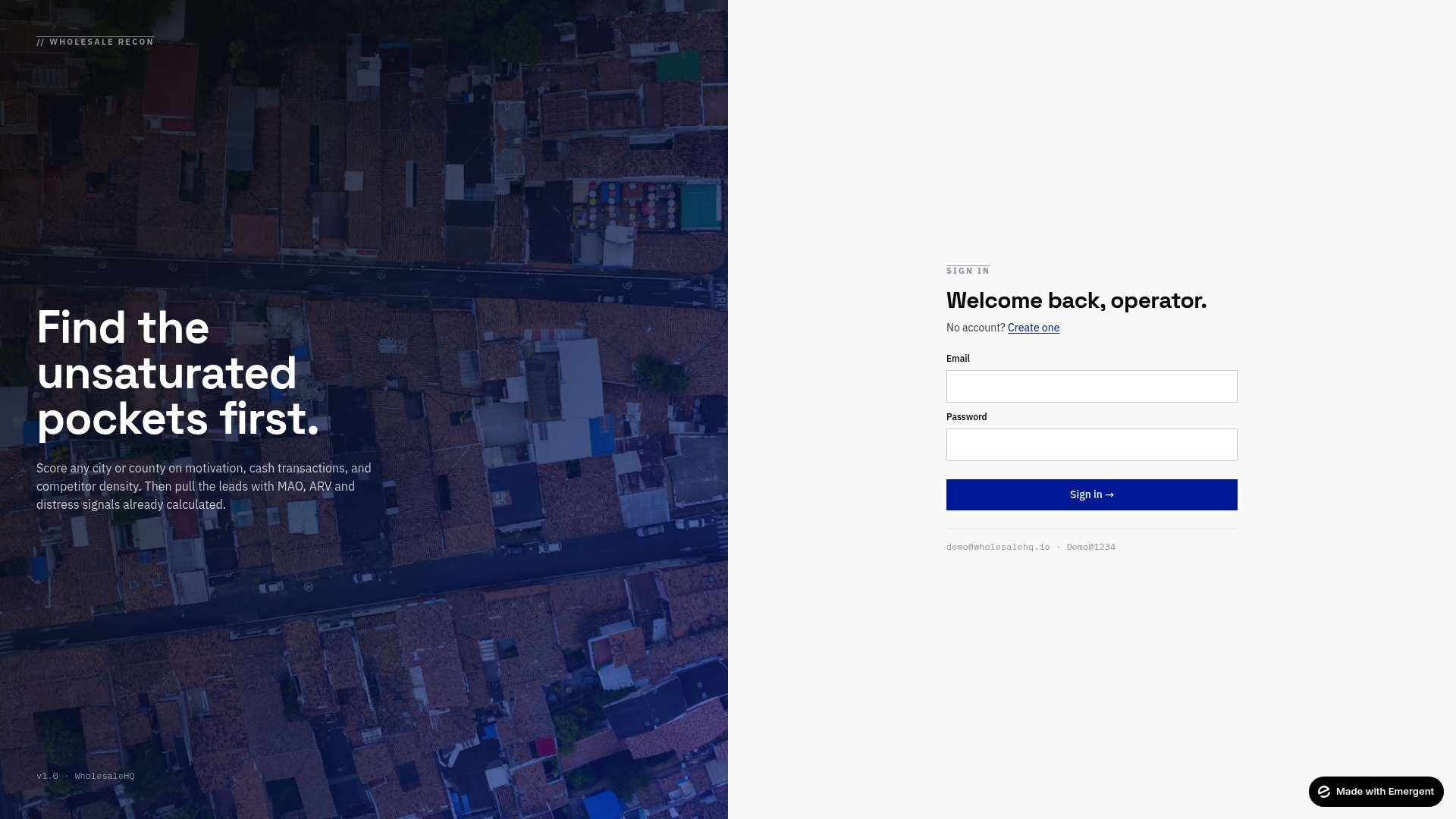
Wholesalehq combines motivation scoring, cash transaction history, and competitor density analysis to surface the leads most likely to convert in your target market. The platform calculates MAO and ARV automatically, so you walk into every conversation knowing your numbers. Whether you're stacking absentee lists with probate data or running a high-volume pre-foreclosure campaign, Wholesalehq gives you the scoring layer that turns raw list data into prioritized deal flow. If you're serious about building a motivated seller acquisition system that runs on data rather than guesswork, explore Wholesalehq and see how it fits your current workflow.
FAQ
What is a motivated seller list?
A motivated seller list is a curated database of property owners who have a pressing reason to sell, such as foreclosure, probate, tax delinquency, or financial hardship. Investors use these lists to target sellers likely to accept below-market offers in exchange for a fast, certain close.
Which motivated seller list type has the highest conversion rate?
Probate and pre-foreclosure lists convert at 2.5–4%, making them the highest-converting sources available to real estate investors and wholesalers in 2026.
How do I find motivated sellers without buying a list?
Driving for dollars, pulling expired MLS listings, and building referral relationships with probate or bankruptcy attorneys are all effective ways to find motivated sellers without purchasing a list. FSBO platforms are also free and updated daily.
How quickly should I contact a motivated seller lead?
Reaching a lead within 15 minutes of capture and following up with multiple touches over 45 days produces the best response rates. Speed-to-lead is the most underutilized advantage in motivated seller outreach.
What data points make a motivated seller list more accurate?
Equity position, tenure, foreclosure stage, probate status, days on market, and price reduction history are the most predictive data points for identifying high-urgency sellers. Lists enriched with these fields consistently outperform raw name-and-address databases.